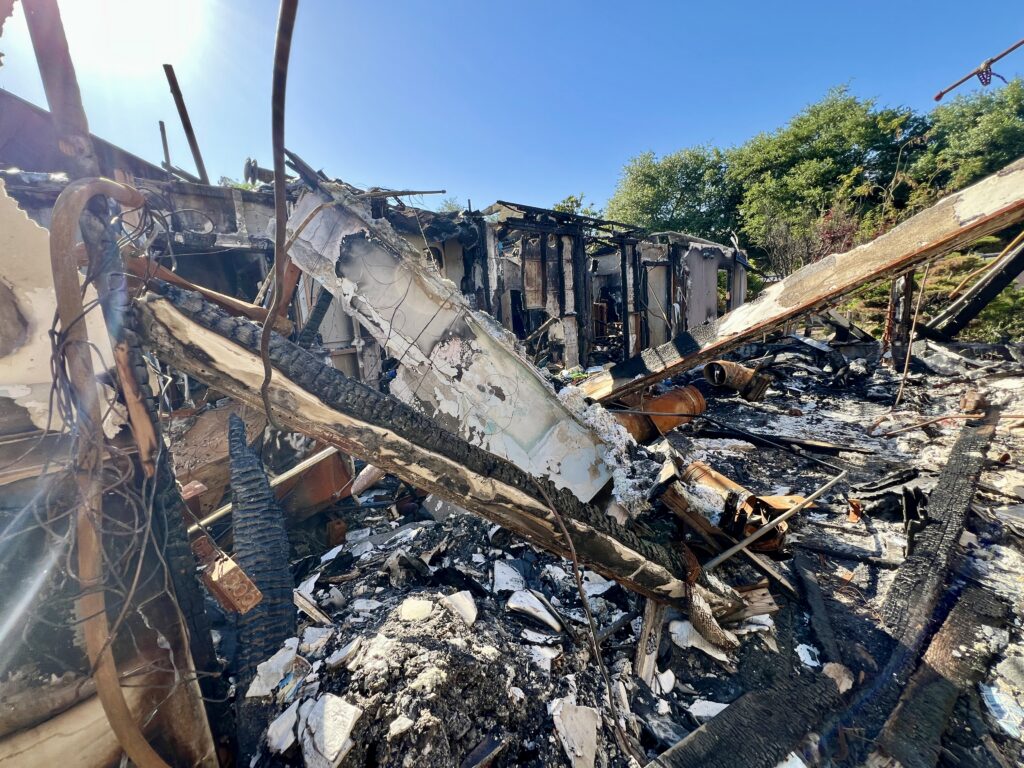
On the evening of January 7th, 2025, John Nishio looked out the back window of his Pasadena, California house and couldn’t believe what he was seeing: A huge red fire ball was swiftly spinning down the San Gabriel mountains and heading straight toward his house.
Howling winds were blowing at 95 mph, and burning logs started landing on his roof. An attempt to spray down his roof failed when the wind prevented him from propping up a ladder, and his garden hose stopped working.
The roof was on fire, smoke started to fill the inside of his living room, and in a matter of minutes, John knew his house was going down in flames.
“We gotta get out of here!” he yelled out to his wife, Susan, and son, Michael. They quickly rounded up their two dogs and headed out the front door. But then John started thinking about his antiques and things he couldn’t bear to lose. He quickly went back in the house and grabbed his grandfather’s tiger art piece, and his computer hard drive.
“Let’s go! Let’s go!” yelled Susan and Michael.
After warning a neighbor across the street, the Nishio’s drove off knowing that a lifetime of living and all the memories that go with it was being left behind. They quickly got on the phone calling local hotels, but none would take them due to their dogs. Finally, a Motel 6 in nearby Arcadia took them in, but the situation there was bleak.
“That first night was hell,” said John. “Heavy winds, the fire was burning all around us, smoke filled the air everywhere and we were choking in our room.”
Dozens of dogs, including their own, were barking non-stop as people stood outside their hotel rooms, and watched as the fire got closer and closer to them.
“We didn’t sleep all night,” recalled John.
The next morning, they bought some water and dog food at a 7/11, and went to a local restaurant for breakfast. It was then that John called his neighbor.
“Your house is gone,” the neighbor said.
With no house to go home to, and not wanting to spend another nightmarish night at Motel 6, John and his family ended up at this parent’s old house about a mile from his house in East Pasadena.
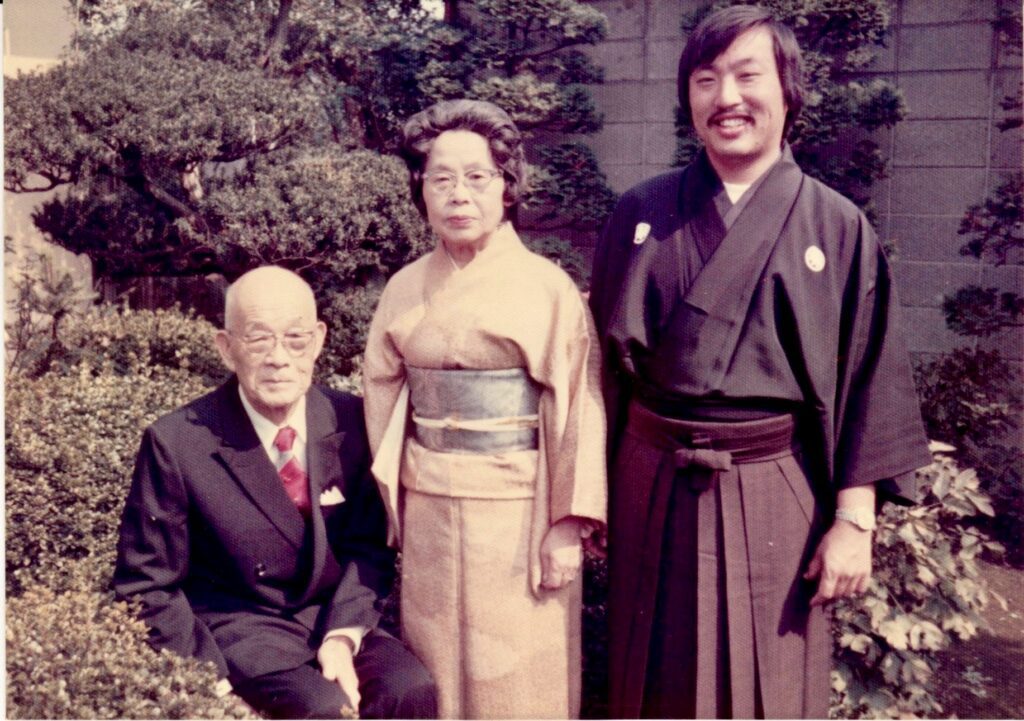
Luckily, his parent’s house had survived the fire, but the conditions there were far from ideal. There was no electricity, no water, and none of the appliances worked. John’s mother, Esther, had passed away several years ago, and his father, Shig, had been living with John for a year and a half before he passed. So the house had been empty and not maintained for the past 10 to 15 years.
The first indication of this was when Susan’s leg went crashing through the rotting wood on the back deck of the house. Once inside, they had no hot water, used camp lanterns for light, and charged their cell phones using a neighbor’s generator.
Prior to the fire, John had made an appointment with a realtor, who had two bidders ready to make offers on his parent’s house. “I had to call the realtor and tell her we can’t sell the house. We’re living here now.”
Three years before the fire, John and Susan had decided that they wanted to live the rest of their lives at their original house. They replaced all the plumbing and wiring, added solar panels on their roof and installed new bathrooms.
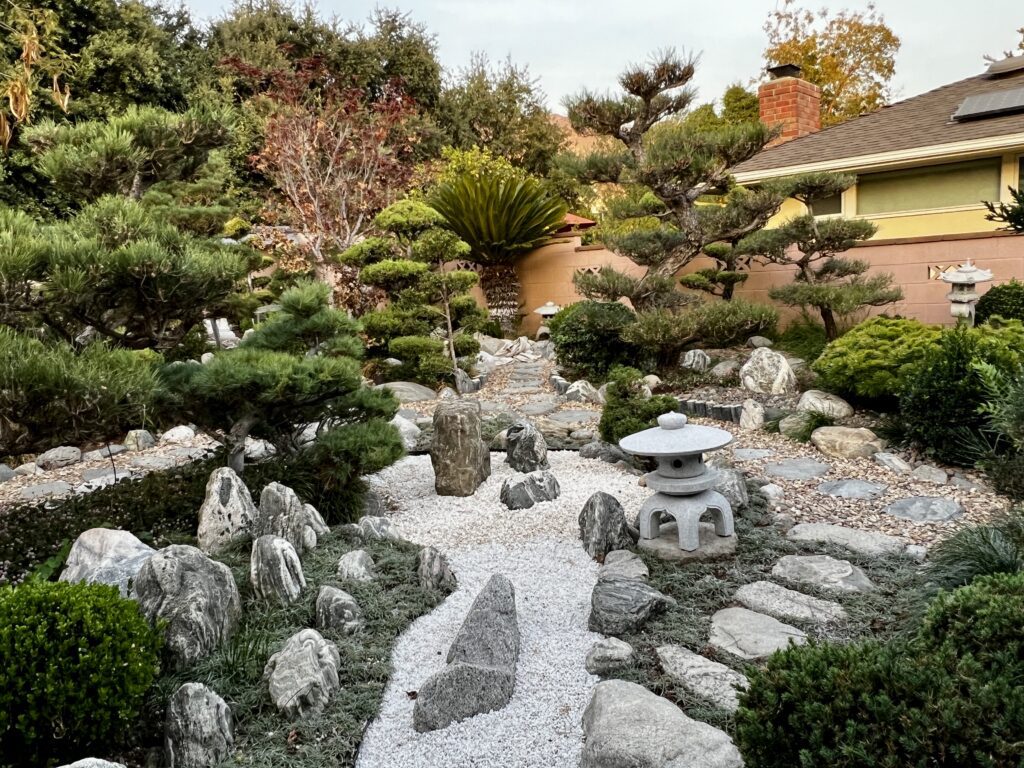
We spent a fortune fixing up our house,” said John. “I spent a year working on my backyard Japanese garden. The house and garden was finished. We could retire and live out our lives there,” he said.
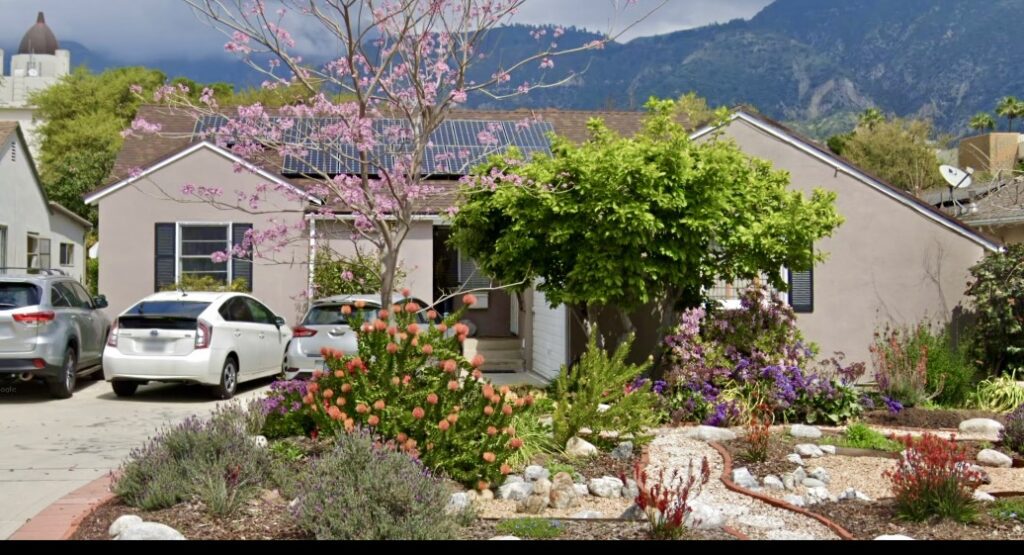
“And then we lost it all.”
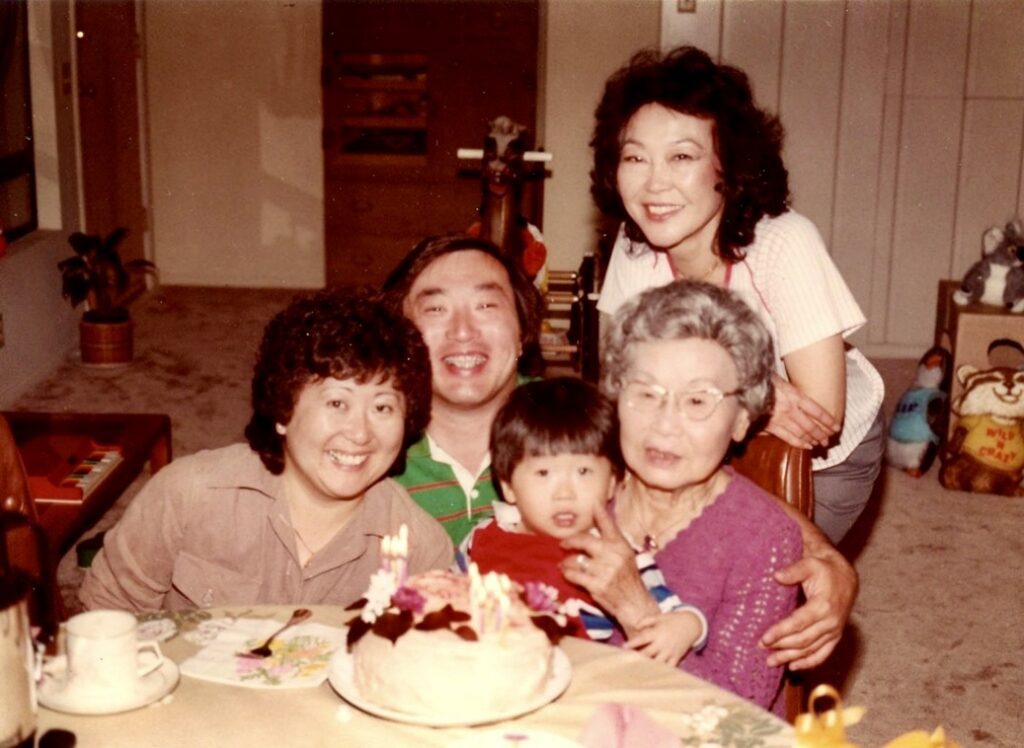
John Nishio, 78, is a Sansei who was born and raised in Pasadena. The only child of Shig and Esther Nishio, he remembers gravitating to the kitchen at age 3 and held onto the dress of his Issei grandmother as she cooked the family meals. At 4, he was helping her peeling carrots and ginger. At 5, he was using a small paring knife, and was proficient in the kitchen.
But at age 7, he got a little too ambitious when he decided he wanted to surprise his family by making them bacon and eggs for breakfast. He got up before everyone at 5:30 a.m., and placed the eggs and bacon onto a fry pan. But the fire was way too hot, and all of a sudden the pan was engulfed in flames. Blue smoke filled the room, the walls and the paint on the ceiling was scorched and seven-year-old John started screaming, “Help! Help! Fire! Fire!”
His dad put out the fire, and all the while, John was thinking, “He’s going to kill me for this!”
But instead of giving him a good beating, his dad did something that changed the direction of his life.
“Don’t worry about today,” he told John. “Mom will show you how to cook breakfast. The first thing you need to do is control the fire.”
Instead of a spanking that could have traumatized him for life, and stopped any thought of ever cooking in the kitchen again, his parents taught him understanding, and then his mom and grandmother showed him how to cook for real.
“By 9, I had my own recipes. By 10, I was teaching the Boy Scouts how to cook. I was making beef stroganoff, spaghetti, casseroles, fried fish, steaks on the grill.”
His fellow scouts and scout leaders were amazed.
“Who made this?” the leaders asked.
“John did,” they were told.
“What? Really?”
By the time he was in junior high, his dream was to become a chef.
But in post-WWII America, especially for those in Japanese America, the idea of becoming a chef was unheard of. Most Sansei pursued careers such as doctors, dentists or lawyers. His family and friends discouraged him from being a chef by saying he would “end up in a greasy spoon” and told him to do something else.
Something else turned out to be an art historian and an English teacher. He enrolled and began study at Pasadena City College and Cal State Long Beach, where he met Susan and fell in love.
But here’s where his life took yet another turn.
At Cal State Long Beach, he took a pottery class after school. His interest in pottery went back several years when at age 5 his parents gifted him with five colorful blocks of modeling clay instead of the taiko drum he had asked for after seeing the legendary Japanese actor Toshiro Mifune play a taiko drummer in a movie.
Angry and disappointed that his parents chose the much quieter clay over taiko, John pouted and refused to touch the clay for a few days. But then he decided to give it a try. He started making worms and animals, armies with little soldiers with rifles and helmets.
“My Aunt Rose, who was a potter, taught me how to make pottery, and even sold some of my stuff,” said John.
“You can make money doing this?” John thought to himself.
Fast forward to college and a craft sale on campus led John to make a number of ceramic animals which sold out immediately giving him much needed pocket money for his dinner dates with Susan.
During this time, he also spent a summer in Japan where he had a rare opportunity to meet and learn from a Living National Treasure potter who was working out of a famous pottery village in Kyoto. In two and a half days, the master spoke and John listened.
“I’m going to teach you in the ways of life of an artist,” the pottery master told him.
“He told me what my mindset should be. Don’t do it just for money. The main thing is make everything you make your absolute best. Because what if that is the only piece of art that survives? That philosophy has stayed with me to this day.”
During this time in Kyoto, he also stayed at the Daitokuji Temple for two months, where he became close with Kobori sensei, a Zen monk who spoke perfect English.
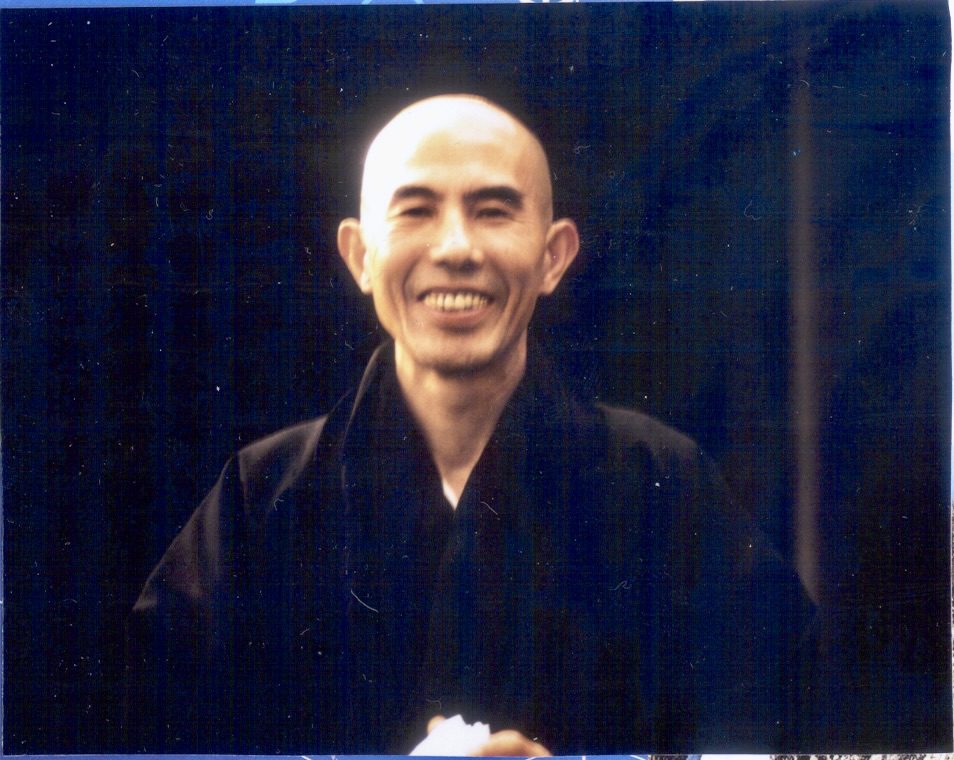
“Kobori sensei liked me, and we would talk and drink together at night after class. He embued in me the Japanese way of life, the way of Zen. It’s your karma, he said, that someday you’ll build a Japanese garden.”
And then he told him something that changed his life:
“You don’t want to be a teacher. You want to be an artist. Follow your heart. Follow your craft. Don’t worry about money. You’ll always have enough to survive. And marry that girl, Susan. She’s the one for you.”
“He set the course of my life,” said John. “I came back, and told Susan, I’m dropping out of the Master’s program to become a street artist.” Upon hearing this news, Susan reluctantly said, “Okay.”
From 1970 to 2006, John made his living as a full-time potter, a 36-year-career that he didn’t get rich from, but made enough to provide for his family. His specialty clay dragons were his big sellers along with several other whimsical animal pieces. However, his and other potter’s businesses drop drastically after 9/11 terror attack in New York in 2001.
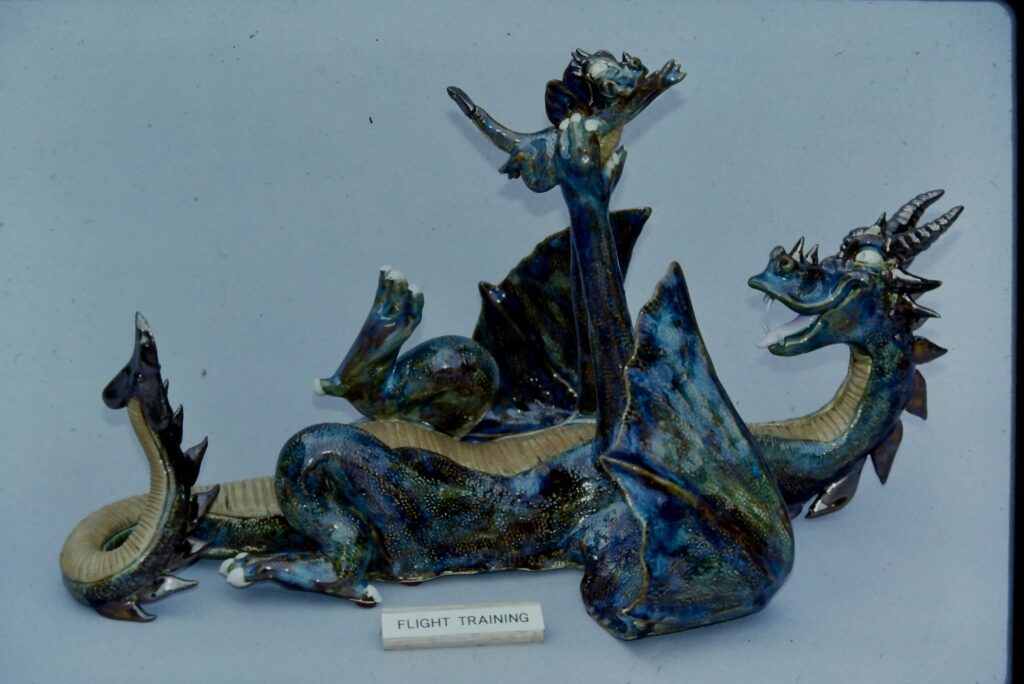
“Right after that, the country lost its sense of innocence and fantasy,” said John. “Potters started going out of business left and right. The sales just stopped after 9/11. All the customers went away.”
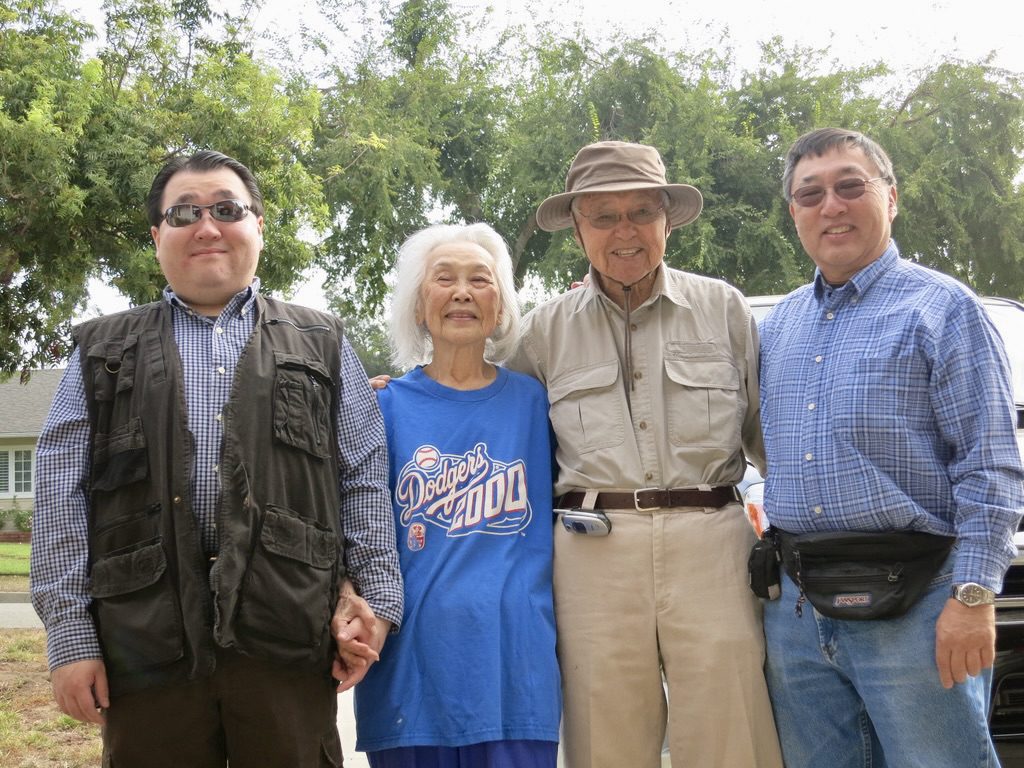
According to John, the most profitable shows at the time were not in his homebase of Southern California, but were up north in the Silicon Valley and in Arizona and Nevada. So from 1993 to 2006—a total of 13 years—John and his dad, Shig, hit the road, set-up and displayed John’s pieces on Shig’s hand-made, wooden displays. They would sell on Friday through Sunday, and then it was the long drive back home on Monday. He would arrive home exhausted, but immediately went back to work making new pieces so he could load it in the kiln by Tuesday, and apply the glaze and fire it by Wednesday. Every Tuesday and Wednesday, he would work 36 hours without sleep.
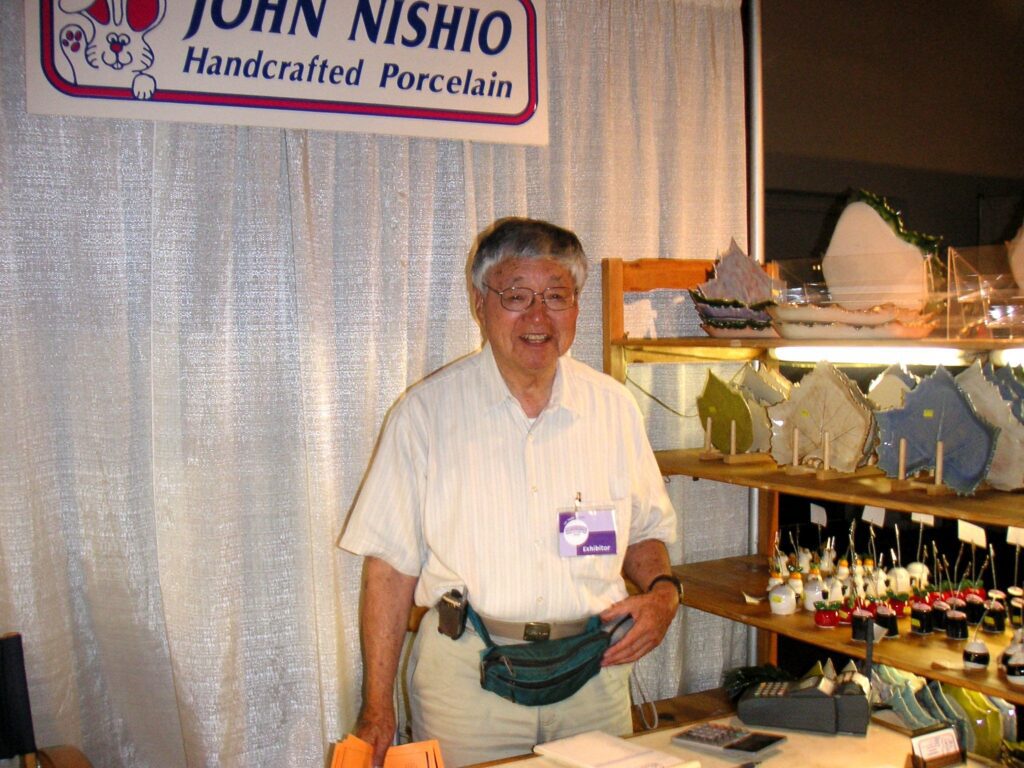
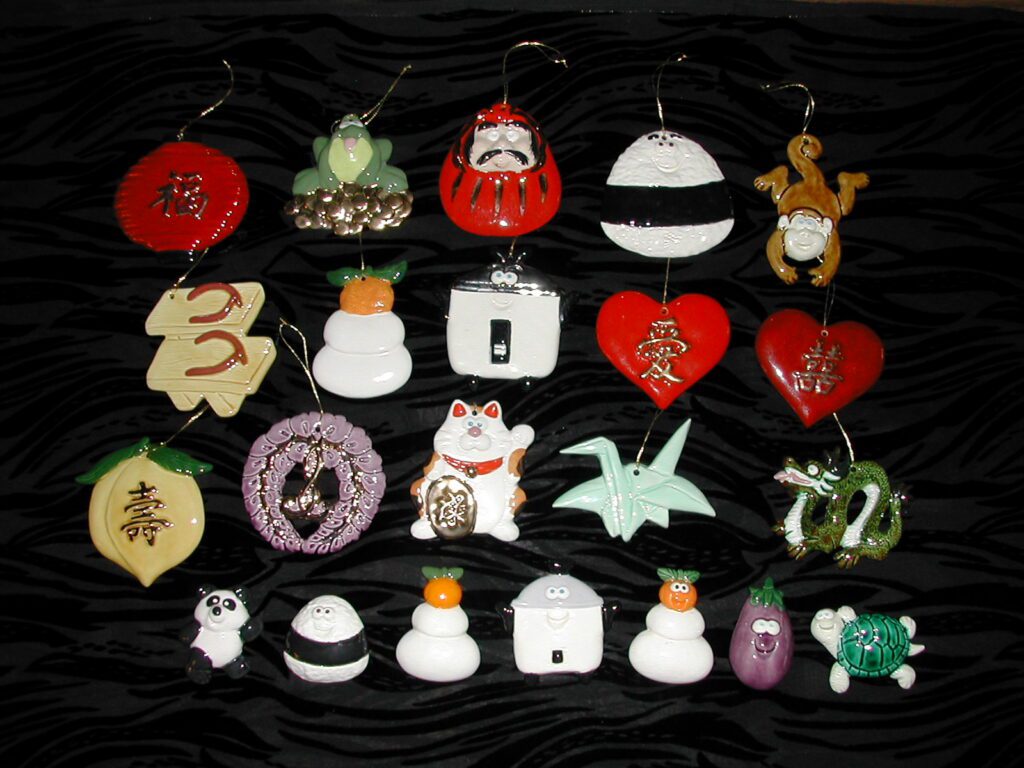
In 13 years, he went through three different vans, spent 80 nights on the road in hotels and motels and got to know many of the towns and the people along the way.
“The schedule and the travel was brutal, but it was fun,” said John. “It was some of the best times I had with my dad.”
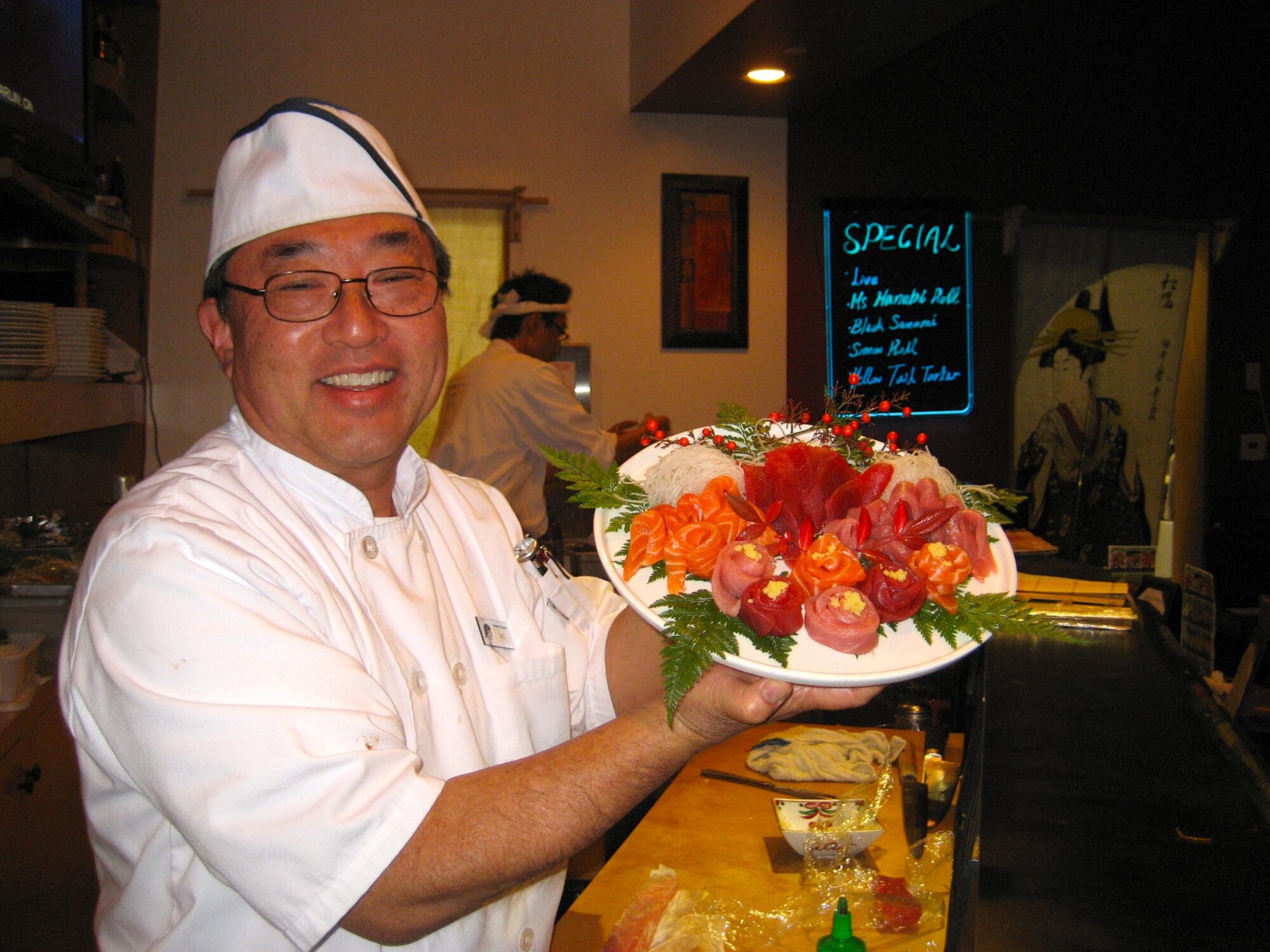
In 2006, he retired from the pottery business and decided to return to his original dream of becoming a chef. He enrolled at the California Sushi Academy, and for the next six months he learned everything he needed to know about being a sushi chef.
During this time, part of the training was to go out on catering gigs on the weekends.
“We catered rich guy parties, went to mansions of the rich and famous: rock stars, country western singers, rappers, Steven Speilberg parties. We did parties at Paramount Studios. Universal. It was a lot of work, making thousands of pieces of sushi, but it was fun. I used my skills as an artist and created special sushi rolls and named them after celebrities like “Ugly Betty.”
After graduating from the Sushi Academy, his first job out of the box was at Bar Hayama, a high-end omakase sushi bar in the Sawtelle area of Los Angeles, which catered to super wealthy Japanese and Korean businessmen. After four months at Hayama, he found another job closer to home at Hanabi Sushi in Pasadena.
But after two and a half years of working at Hanabi Sushi, he realized his “dream job” wasn’t really a dream job after all. His Korean boss didn’t like Japanese people, and treated him “like crap.” And all the prep work from 8 a.m. to midnight everyday started to take a toll on John’s body. But what really did him in was the constant intake of beer and sake that customers traditionally buy sushi chefs as a way to show their appreciation.
“I had to drink it because the customers watch you as you drink it,” said John. “But for a light weight like me, I would end up driving home drunk. It was bad.”
The final blow to his sushi chef career came from his doctor: “You’re allergic to alcohol,” he told John. “If you keep this up, you’re going to die.”
Before he could quit, he and a number of others from Hanabi got laid off.
His sushi chef career was over, but he said he learned a lot. So now he was unemployed, at home all the time, and driving Susan crazy. “Why don’t you get a job a Ralph’s since you know everyone there?”
Ralph’s market near his house in Pasadena. He applied and was hired. On his first day on the job, his manager saw him pushing shopping carts in the parking lot and said, “You’re too good to be pushing carts; why don’t you work in the Coffee Bean and Tea Leaf?
So for the next six years, he was a barista at the Ralph’s market Coffee Bean and Tea Leaf, where he’d whip up your Chai latte and chat you up as you waited. He was so good at this that a number of customers became his “regulars” and he would start preparing their drinks once he saw them walking up from the parking lot.
In 2014, a conflict with a fellow employee led to his termination. After he left, many of his customers went with him, and business dropped by 40 percent.
“That’s when I met you,” he said, referring to me, Soji Kashiwagi, the author of this article. “You changed my life.”
Prior to 2014, John had seen some shows that our theater group, the Grateful Crane Ensemble, produced and performed in the LA area. One day out of the blue, John emailed me and asked if he could serve as a volunteer.
Needing help with the loading and unloading of sound equipment we haul around to our shows, I asked John if he could volunteer some time at our next show.
But at age 66, it became evident rather quickly that a man his age shouldn’t be loading and unloading heavy speakers, mixers and other assorted equipment.
After the show, I apologized for putting him through that, and took him to lunch.
During our conversation, John told me he grew up eating the “Chinameshi” at the old Far East Café in Little Tokyo, and had been trying to re-create the famous dishes from there ever since the restaurant closed due to the Northridge earthquake in 1994.
That’s when a light bulb went off in my head: What if you were to do a fundraising dinner for Grateful Crane featuring your re-creations of the Far East foods?
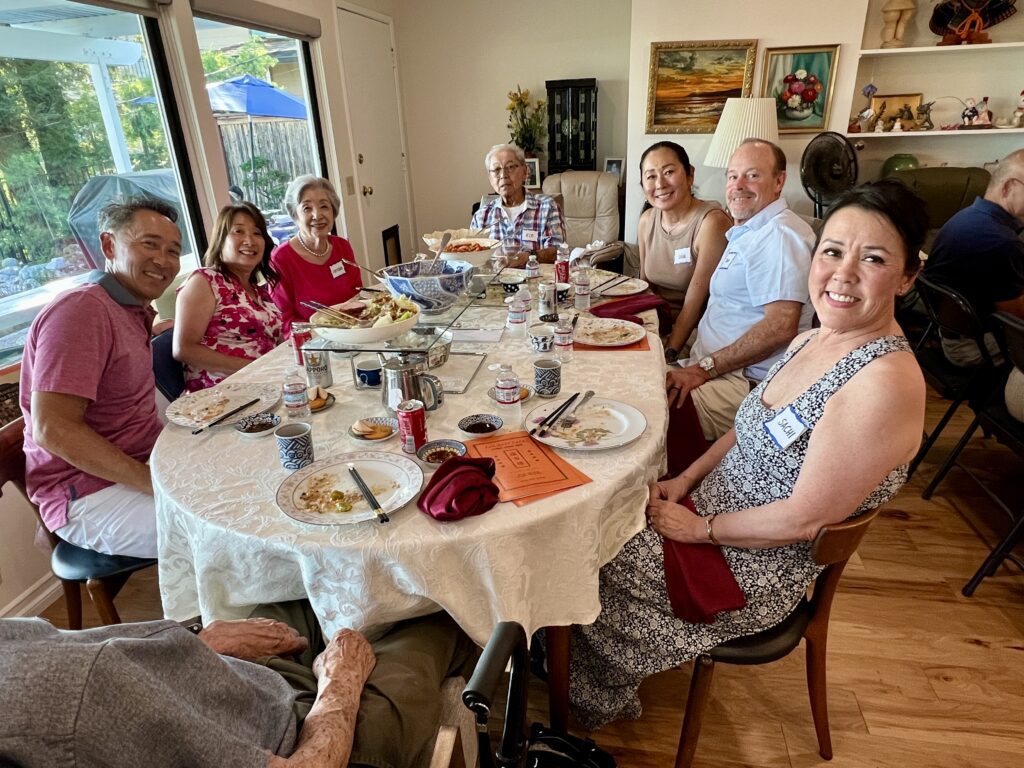
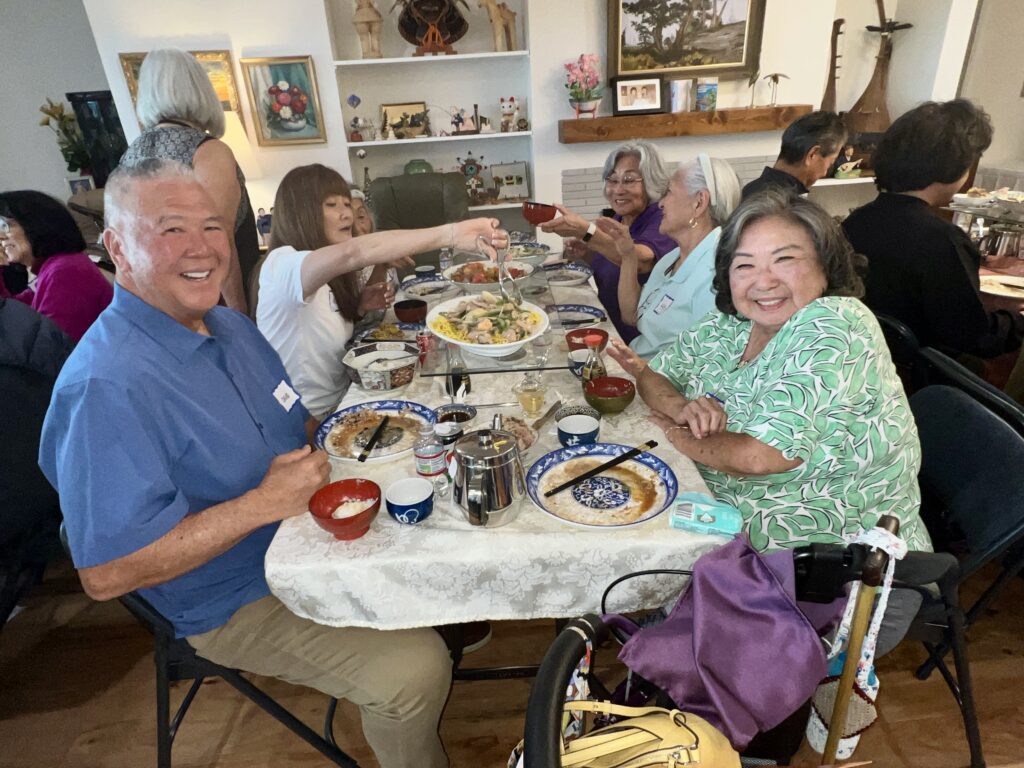
My first thought was a dinner for 300-400 people, but John said he couldn’t do that many, and preferred to cook the meal out of his home kitchen. We decided to make it an intimate dinner for 20 guests, drew up a menu of the dishes he had been re-creating, and called the event, “The Far East Feast.”
The first “trial run” feast happened in 2016, and featured all the favorites currently on the feast menu: seaweed soup, chowmein, pressed almond duck, pakkai, homyu, chashu, shrimp with lobster sauce, and ginger beef.
Liz Doomey, a Sansei from the San Fernando Valley who grew up eating at the Far East Café, was among the very first guests we invited for a “trial run.”
“My brother, Allan, and I both felt that John’s food was close on flavor but just a little different,” said Liz. “We keep coming back as often as we can because we love the taste of Far East Cafe and John does it best. He makes all our favorites and we hate to miss any of the Far East Feast Fundraisers.”
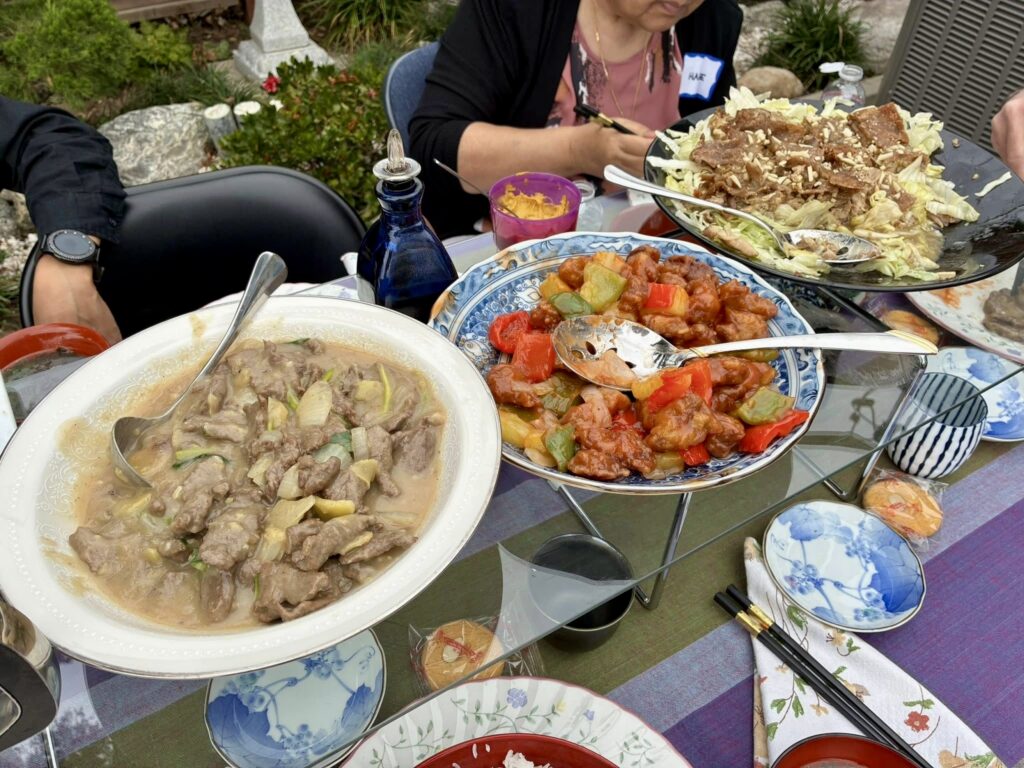
Feedback from guests like Liz encouraged us to keep going, and in 2017, we hosted our first Far East Feast for the general public. The response from people was immediate and overwhelming. One taste and many were immediately taken back to the family table at the Far East Café, and they could imagine their parents, grandparents, aunts and uncles and cousins all sitting around enjoying the food and each other’s company. This fond food memory was so powerful that some have started to cry after tasting John’s Chinameshi.
Since 2017, we’ve hosted over 30 feasts and have served hundreds of guests, 20 people at a time, and some more than once. The event has become a fundraiser for the Fukushima Bottled Water Project, where thousands of dollars from our feasts have been donated to a non-profit in Japan which purchases and delivers fresh, clean bottled water to children at a nursery school in Fukushima. In this area, parents are still worried about the safety of the local drinking water after the 2011 nuclear disaster. The water has given them peace of mind, and good health for their children.
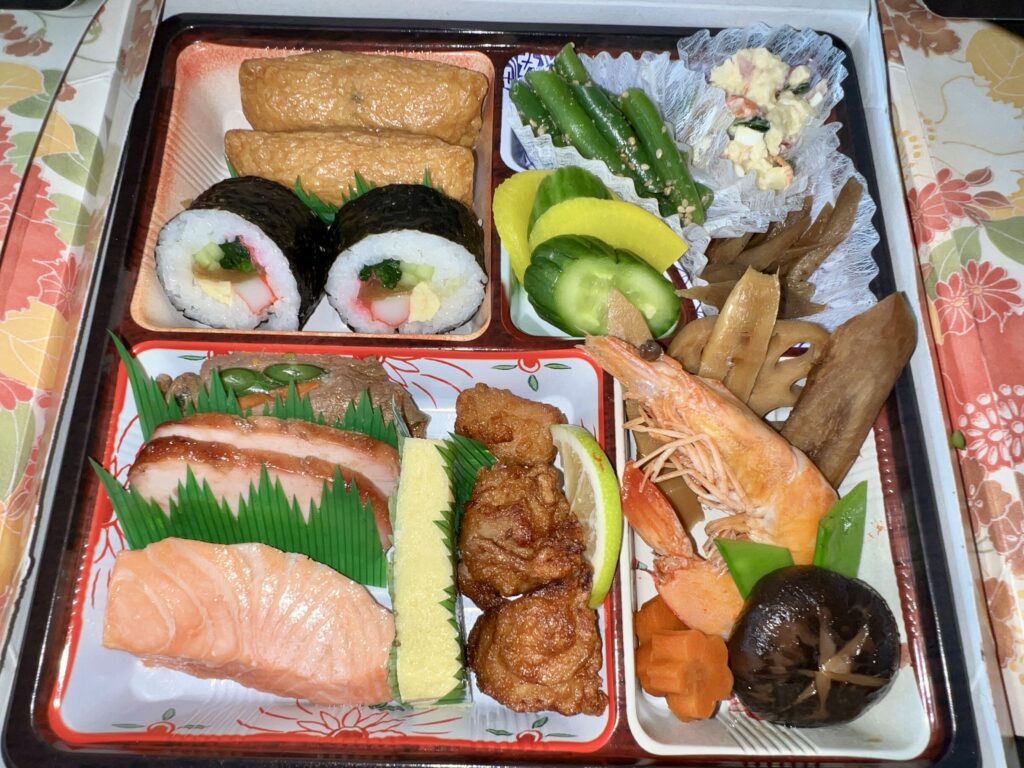
In the 2020’s, John once again worked with Grateful Crane to create the Kenjinkai Picnic Bento Sale, another nostalgic meal in a box that tastes “just like Baachan used to make.” For this bento, John re-creates the dishes he remembers from the Kenjinkai picnics he attended as a child: Inarizushi, makizushi, salmon shioyaki, chicken karaage, Japanese potato salad and nishime, just to name a few.
It’s these “Issei flavors” that John wants to preserve, and if people like him don’t make it, they will be lost forever. In this spirit, he also teaches a “Dining with the Chef” Japanese cooking class at the San Fernando Valley Japanese American Community Center, where 20 students learn to make “Issei dishes” based on recipes he learned from his grandmother as a child. Since late 2022, he has taught 10 classes with more planned for 2027.
In January, 2025, John and his family was all set to host yet another Far East Feast at his house. That had to be canceled due to the Eaton Fire, and soon after that, John informed me that he could no longer do the feasts. Our nearly ten-year run was over.
After settling into his parent’s house, John put the word out on Facebook about what had happened and what his family had been through. His relative, Jenny Penner, started a Go Fund Me to help the family, and we put out a “need for donations” call also on Facebook, and the response from our community was overwhelming.
“People started driving up to our house giving us clothing, appliances, food and cases and cases of water,” said John. “Susan would see these donations and would just burst out in tears.”
Like many others in the Japanese and Japanese American communities, John was embarrassed and uncomfortable in accepting help from others—at first. But this feeling lasted about a day when he realized this was no time for false pride.
“I looked at Susan and Michael, they left the house with only the clothes they were wearing and lost everything else. I said to myself I can’t be proud. We need help. We weren’t okay. For the first time in our lives, we weren’t okay.”
Donations came in from individuals, relatives, friends he hadn’t seen in years, friends on Facebook, from local Japanese American churches and community organizations.
“We kept asking, ‘Why are people doing this for us? We don’t deserve this. But a friend told me to just accept the donations and be grateful. They feel like they’re paying you back for all you have done for the community.”
Thanks to this overwhelming support, the Nishio’s slowly started getting back on their feet again, and at some point in mid 2025 they decided they wanted to fix up the parent’s old house, and make it their new home. Insurance funds came through in a big way, and that was put into a year-long, full-on renovation of their house. They added in a brand new “dream kitchen” for John. Put in new flooring. A new roof. A brand new deck in back. New windows and a new garage door. And with the help of his gardener/contractor, Miguel, John built a brand new Japanese garden in his backyard, using many rocks and boulders he salvaged from his old house.
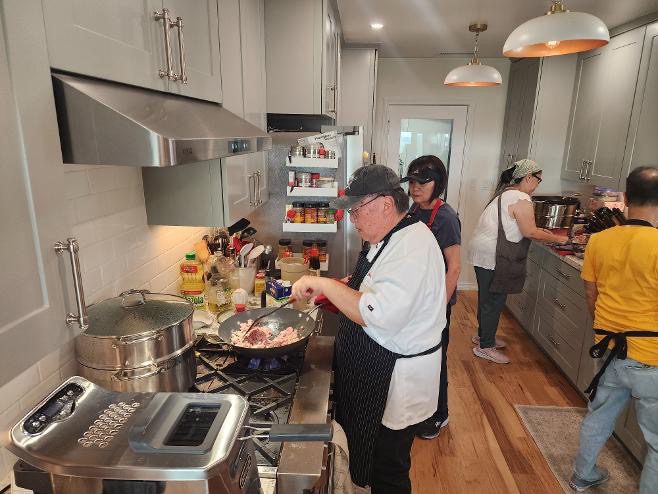
At the end of 2025, John contacted me again and said he wanted to bring back the Far East Feast. “I want to do it for those children in Fukushima,” he said.
The Feast was back, and the first one since the fire was held at his new house in May 2026 and another one happened in July 2026. The Nishio’s were back. John Nishio, the artist and chef, was also back.
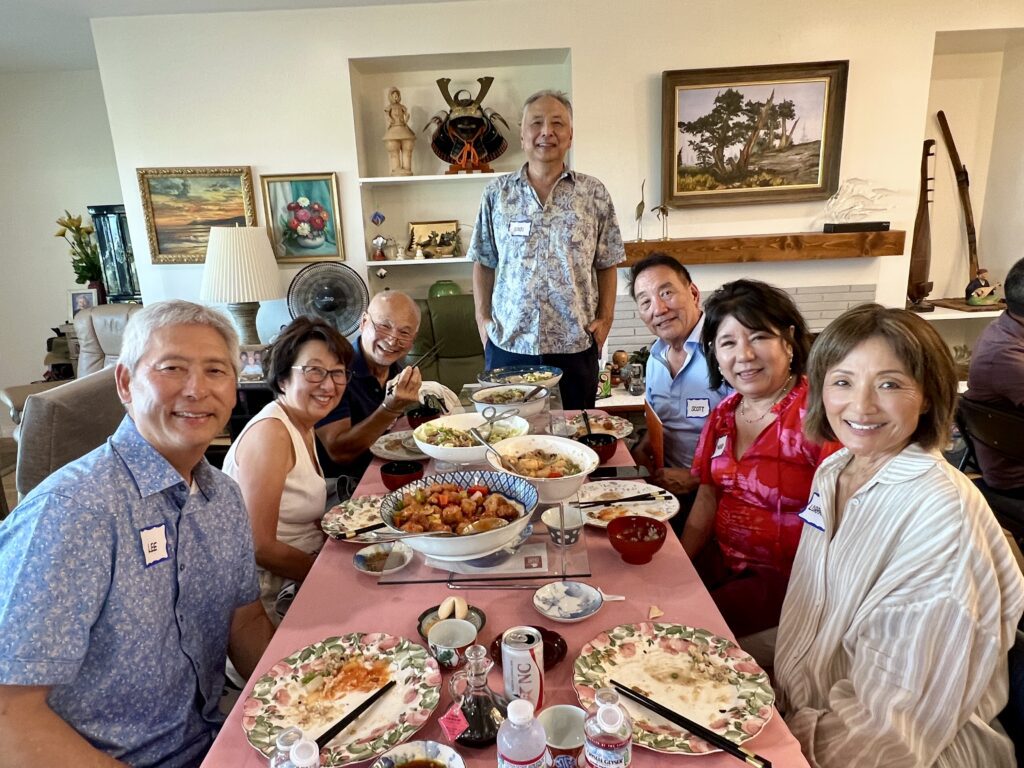
Looking back, through all the insurance headaches, and dealing with mountains of paper work, red tape and government bureaucracies, he wouldn’t want to go through this again, and wouldn’t wish it on his worst enemy. However, throughout it all, it was the voice of his grandfather that he heard over and over in his head that kept him going:
“You are Samurai,” his grandfather used to tell him. “You can’t quit. You fight until you die. You can’t let it beat you. He also told me, “You are not alone. You are part of a family, an entire clan and a community.”
In all, over 9,000 structures were destroyed in the Eaton Fire, primarily in Altadena and Pasadena. John Nishio’s was one of them, but he is deeply grateful to his parents for their house, and his community for all their support.
“Thank you from the bottom of our hearts for coming out to help us,” he said. “I never felt like I deserved it. I spent my life helping others, but never thought I would need it. I had to take it, but it has flowed through us, and now it is back out again.
“I look at life totally different now,” he said. “I realize I am part of a greater community. In the time I have left, I want to do what I can to preserve our cultures. I owe that debt to the Issei and Nisei. It’s up to us to preserve it.
“My grandfather wanted me to be a culture carrier. I love doing it. Seeing the Sansei, Yonsei and now Gosei eyes light up when they learn about it. Now they know what their ancestors went through, what racism they had to endure. They did it for us, in hopes we would have a better life.”