
“I found my way, my being, my essence, why I’m on this earth. I do what I want, when, where, and with whom I want.”
There’s a Japanese word, omoshiroi, that means interesting, intriguing, funny. Dennis Makishima has spent 75-plus years earning every syllable of it. Born in Berkeley on February 25, 1947 (what he calls the day “the Makishima tornado was born”), he has been touching down in unexpected places ever since: a rice paddy in the Central Highlands of Vietnam, a bonsai nursery in Toyohashi, Japan, the Storybook Land ride at Disneyland, and the green hills of the East Bay where he pruned trees until the work became indistinguishable from art.
Dennis is a Sansei—a third-generation Japanese American—bonsai master, aesthetic pruner, teacher, and one of the most distinctive characters to emerge from the mid-century Japanese American community of Berkeley, California. His life is a story about finding your calling, going all the way with it, and leaving on top.
“Wake Up Sleepy Head”
Dennis grew up in South Berkeley in the 1950s, the youngest of four children in a Japanese American family navigating post-internment poverty. His father, Hatsuichi, a gardener, died when Dennis was eight. His mother, Masuye—a kibei, meaning someone born in the U.S., sent back to Japan for schooling, and then returned to the U.S.—raised him largely on her own while working as a house cleaner.
When Dennis was five, Masuye would open his bedroom shades in the morning and say: “Wake up sleepy head. Listen to the little bird outside saying time to get up, today is a new day.” Seventy years later, he still wakes to the sound of a wren. “I now know it’s mom saying, ‘Today is another day. Time to learn something new.'”
Masuye graduated from Berkeley High School Adult Program at 84, cap, gown, large bouquet, and led the procession of young students onto the stage. Dennis, watching from the aisle, calls it the proudest moment of his life. She took computer lessons at 90, was celebrated by her community at 100, and lived to 102. “Looking back, I now thank mom,” Dennis says. “My father only lived 55 years. I’m in my mid-70s. I’ve already lived 20 years longer than my father. My mother made it to 102. Thanks mom.”
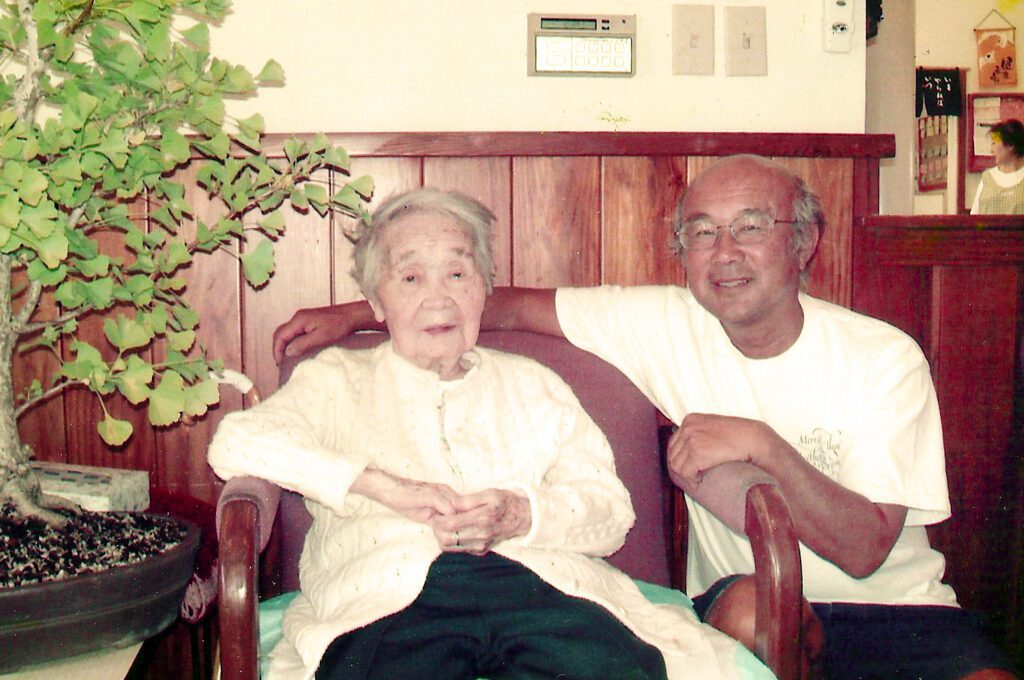
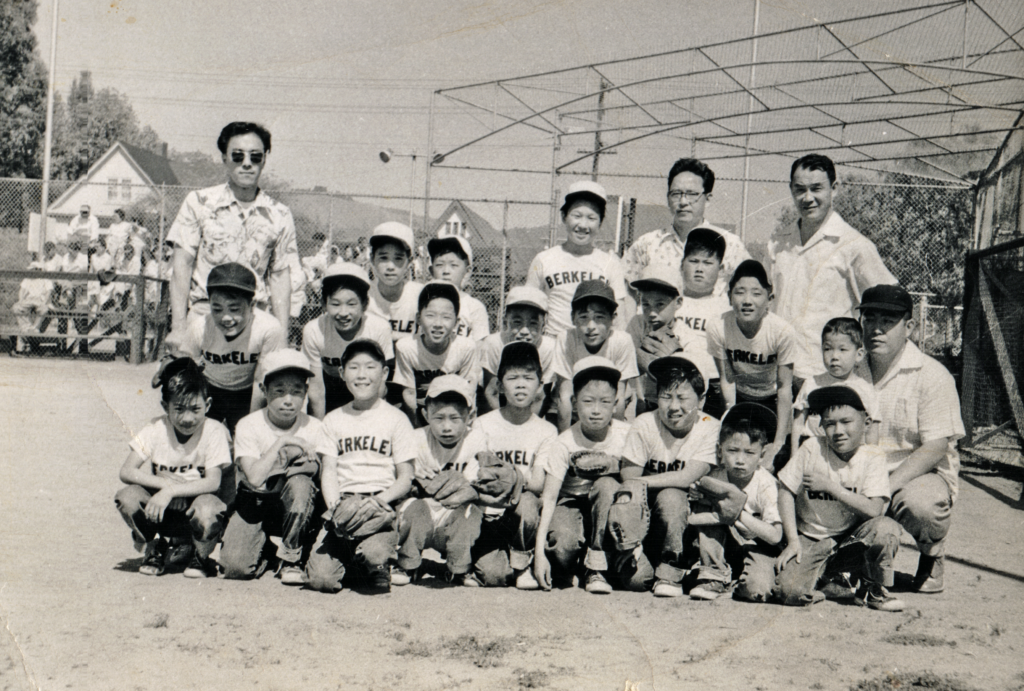
The neighborhood Dennis grew up in was “quite an interesting meld of Black and Japanese American culture,” he says, and it shaped him permanently. He was physically small and constantly picked on, and early on developed a philosophy of swinging first and talking later. The Greer brothers, born thugs who lived two houses up from his grammar school, looked out for him “as if I was their cherished pet.” He joined the Berkeley Bears, a Japanese American baseball league founded in 1957 that would go on to become legendary in the community. He learned every dance step from the most popular girl at Berkeley High, then deliberately taught the other boys the ones going out of fashion, so he’d be the only one looking good at parties.
You’re in the Army Now
Dennis came of age in the center of a cultural storm: Free Speech protests at UC Berkeley, the assassinations of Kennedy and King, the birth of the Asian American political movement. He knew Yuji Ichioka, who, along with Emma Gee, coined the very term “Asian American” while organizing at Cal. He marched in protests. And then, in the summer of 1966, he was drafted.
He shipped out to Vietnam on Christmas Eve, 1966. His first assignment was burning the latrine waste. His first night, sweating through his fatigues on a cot in a tent, a rat chewed on his boot. He learned to hold his breath through tear gas, ran as a road guard, and eventually became a section chief in the U.S. Army Signal Corps in the Central Highlands, making sure, as a communications specialist, that units didn’t accidentally fire on each other.
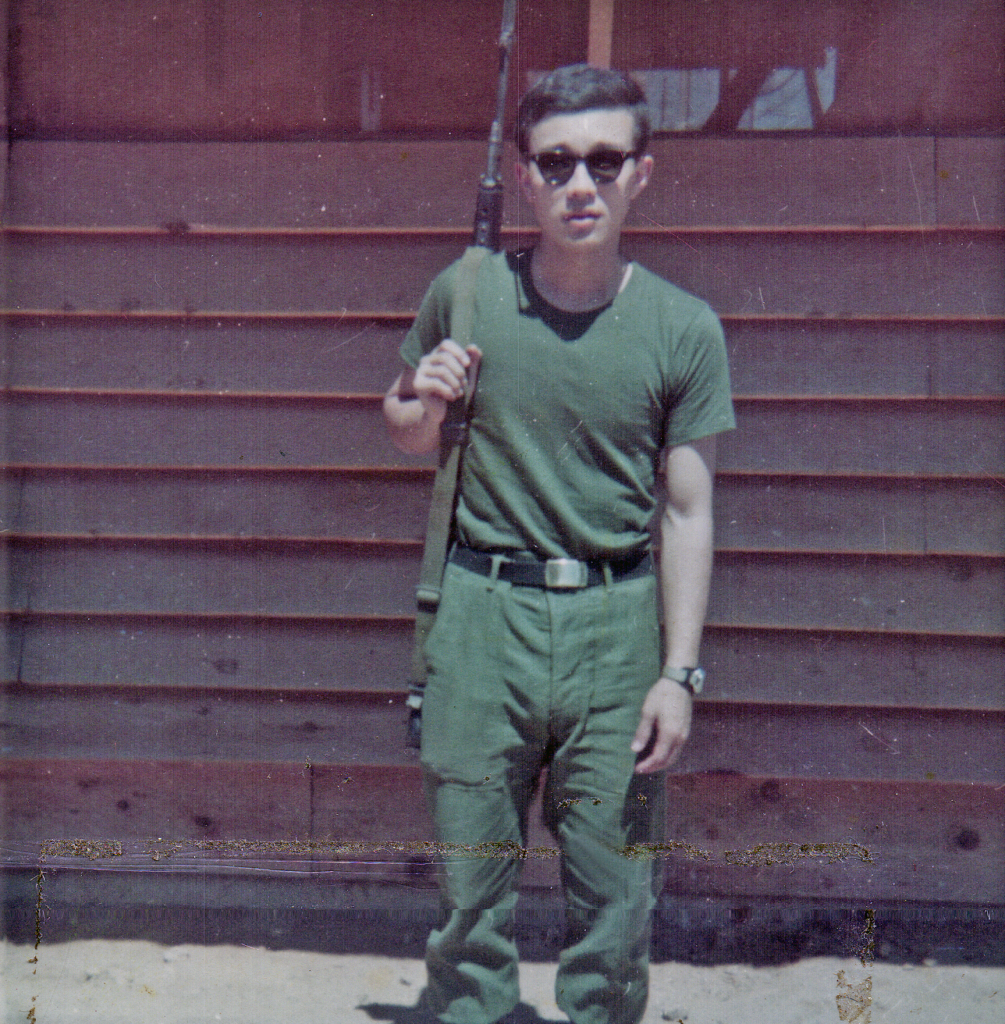
One story from that year stays with him. Bob Hope was touring Vietnam when his team tracked down Dennis’s unit. Hope had promised a soldier’s wife in Georgia that he would connect her to her husband, stationed deep in the boonies near the Cambodian border. The relay failed. Dennis became the go-between, repeating the couple’s words back and forth across thousands of miles of patchy signal.
“The wife said, ‘I love you, dear.’ I repeated, ‘I love you, dear.’ The soldier said, ‘I love you too.’ I said, ‘I love you too.’ The wife said, ‘I can’t wait for you to come home, and I can give you hugs and kisses.’ I said, ‘I can’t wait for you to come home, and I can give you hugs and kisses.’ The soldier said, ‘Can’t wait to be in your arms.’ And I said, ‘… … …'”
He left Vietnam on Christmas Eve, 1967, exactly one year after he arrived. The massive Tet Offensive began three weeks later. When he finally boarded the plane home, he reflected on a promise he made several months before: “If I ever get out of this mess, got to go for it. Life on earth is so short.”
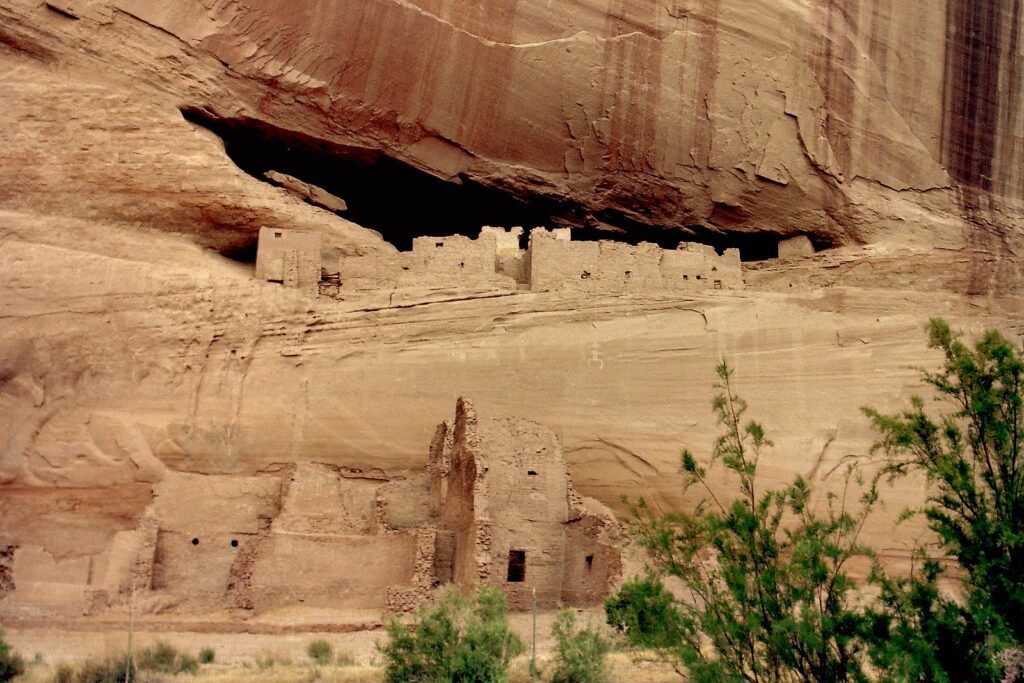
Canyon de Chelly
After his discharge, Dennis felt alone, disoriented, and sad. “I was mad at the world and almost everyone in it,” he says. He drove into the desert, Nevada, then Arizona, with no clear destination and no particular will to turn back. He ended up sitting for three days on a hillside above the Navajo cliff dwelling at Canyon de Chelly. Something in that silence reset him.
“That quiet, reflective moment at the Navajo reservation saved my life,” he says.
“I returned home, signed up for the GI Bill, and went to college.”
At UC Berkeley, he majored in Political Science with a minor in Asian Studies. In classes debating Vietnam, he spoke from experience, “I was there, and this is what I saw,” and the room went quiet. He met Joanne, who became his wife and partner in everything. He tried court reporting school, hated it, and was offered a manager job at The Produce Center, a beloved Berkeley fruit-and-vegetable store in the nascent Gourmet Ghetto, steps from Peet’s Coffee and Chez Panisse. He stayed for years, sharpening his instincts for quality, customer service, and communication, skills that would come to define his second career, the one he hasn’t found yet.
The Aesthetic Pruner
At 35, Dennis found his life’s work. “I felt I was artistic, but couldn’t sing, play an instrument, draw, paint, act, or sculpt,” he says. “Frustration. Then I pruned my first tree.”
He developed a philosophy he called aesthetic pruning: “An aesthetic pruner strips tree to its essence. Brings it out. Finds the good, doesn’t dwell on bad.”
He invented his own vocabulary. The “big ugly to little ugly” theory: don’t aim for perfection in the first pass, remove a third of the problems each year for three years. The “whittle down theory” counsels patience. He learned to think not of the cut in front of him but of the tree five, ten, twenty years on.
“Don’t prune to perfection,” he says. “Prune so trees can grow to perfection.”
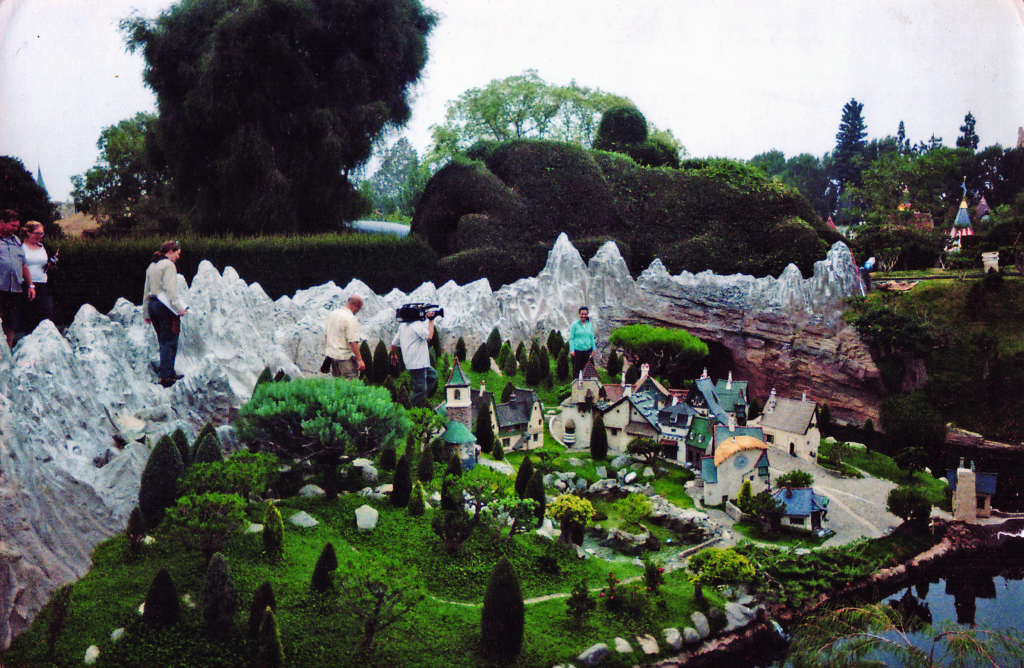
The clients came. An architect added $10,000 to a mansion’s asking price because the property includes “an old Japanese maple styled by Dennis Makishima.” In 2011, Disney invited him to restyle the historic Swiss Mountain pine that Walt Disney himself planted in Storybook Land, and to conduct aesthetic pruning workshops, with the entire process videotaped for posterity. He pruned trees on a faux mountain at the Playboy Mansion. He spent decades volunteering in the Japanese garden at Lakeside Park in Oakland.
In 1986, he began teaching at Merritt College, where the horticulture department became nationally known under his influence. Over forty years, he has trained more than 100 apprentices. His advice to students is straightforward: “Always do what you can do, don’t dwell on what you can’t do. Start your career. Don’t procrastinate. When you have everything going for you, all feels right, trust your instincts. When in doubt, go for it.”
A Bonsai Apprentice in Japan
In 1983, at a family party in Hayward, Dennis took the wrong route to the bathroom and overheard a man talking about bonsai. That man was Mas Imazumi, a Northern California bonsai master. Dennis signed up for his class. Seven years later, he was one of the first Americans selected to apprentice in Japan’s professional bonsai world, studying under master Yasuo Mitsuya at Tokai En in Toyohashi for two years.
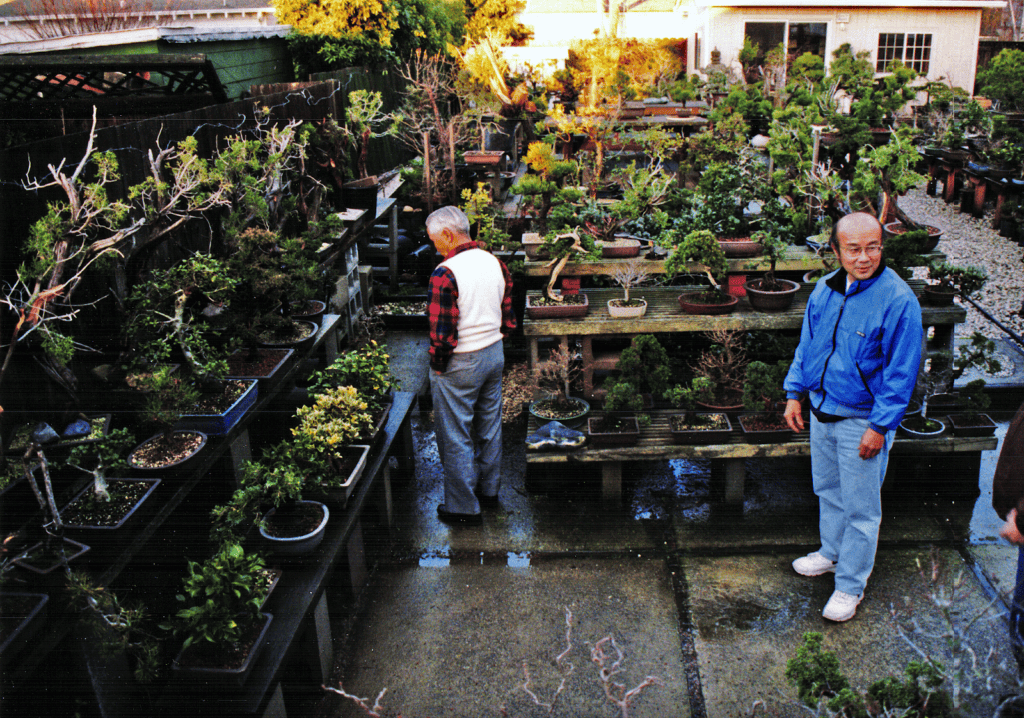
He sat at the bottom of the bath order. He carried equipment up rain-slicked spiral staircases, fell on his elbows and knees while hauling a bonsai, and held on. “If you drop a bonsai, it better land on you.”
What he brought back was not just technique but conviction. He became a fierce advocate for old Japanese American bonsai, the trees tended by Nisei gardeners after they were released from internment camps, grown from seed, shaped with humble simplicity, surviving on what he calls “benign neglect.” As the old-timers passed and their collections were sold, he acquired and preserved these trees, amassing over 100 old-style pines dating to the 1950s. He considers the contemporary bonsai world’s dismissal of these trees “a crime against art, the application of one art over another.” He calls them folk art. He means it as the highest praise.
Over the decades, he has traveled the world, to Australia, Germany, Hawaii, New Zealand, Spain, and Japan more than a dozen times, demonstrating, teaching, and representing a distinctly Japanese American perspective in an international art form.
The Donation
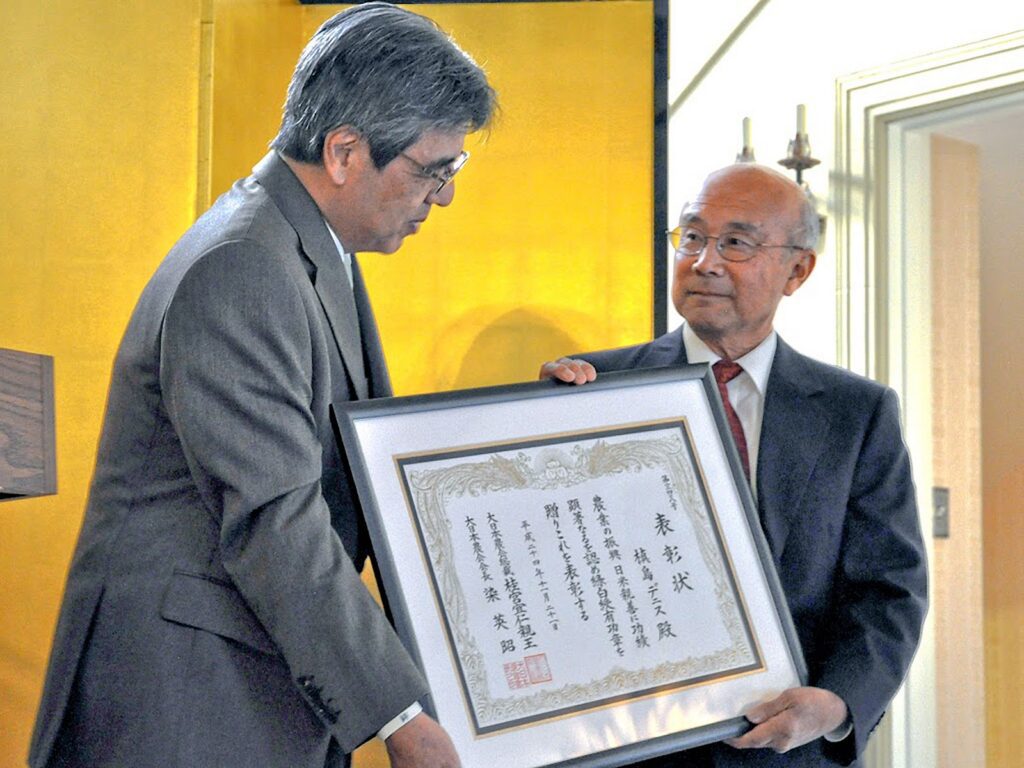
In February 2022, on his 75th birthday, Dennis donated his entire bonsai collection to the Golden State Bonsai Collection at Lakeside Park in Oakland: 650-plus trees, pots, tools, stands, books, scrolls, wires, and memorabilia. The estimated value was $250,000. The collection is named the Dennis and Joanne Makishima Curator Fund.
“I believe in leaving on top,” he says. “I’m not quitting.
I’ve reached my artistic goal for each tree as well as my collection in general. Time to pass everything along for others to enjoy.”
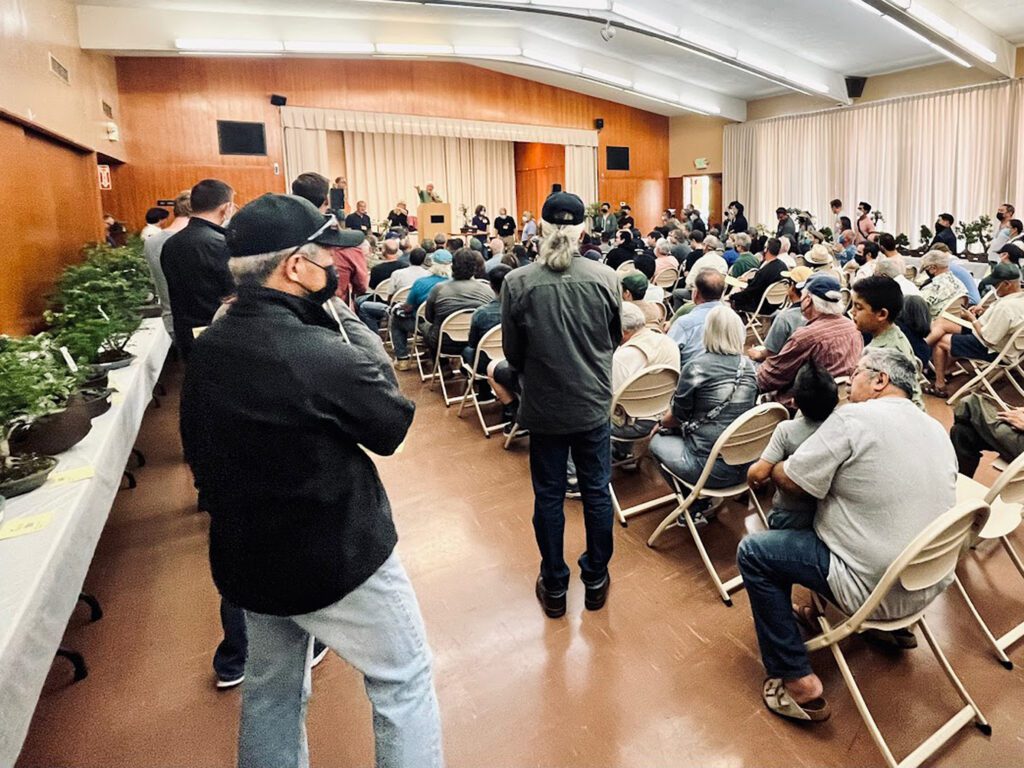
The auction, held in July 2022, drew a turn-away crowd. It raised $140,000 from bonsai alone. Friends called to ask if he is dying. “I’m fine,” he told them.
He is now growing bonsai from seed again. Sowing pines and maples, oaks from acorns, junipers from cuttings. Starting over, but with new eyes.
“I believe infinity is a spiral, not a line that goes out and never ends. In a spiral, the line goes out and eventually comes back, but at a higher plane from where it started.”
Mr. Omoshiroi
In his junior high school yearbook, when asked to list his hobby and future occupation, Dennis refused to answer. It wasn’t cool. The editor filled it in for him:
- Hobby: Collect junk.
- Occupation: Junkman.
Today, his backyard in El Cerrito is filled with a series of whimsical vignettes, ceramic frogs, a cement puffer fish, a Trojan horse, tiny plastic people set at scale among stones and stands, assembled entirely from found objects, curbside discards, and gifts from former students. He drives the streets collecting, exactly as the yearbook predicted.
“All was meant to be,” he says. “Married my wife Joanne, found career as aesthetic pruner, traveled, practiced bonsai, taught students, and made best friends.”
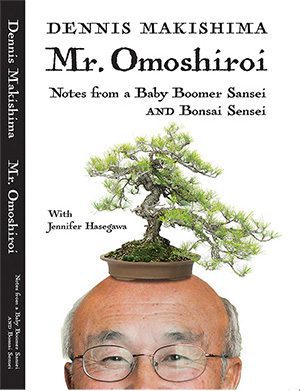
As Dennis would say: “Read between the lines, have fun, dream, and take the leap.” Mr. Omoshiroi: Notes from a Bonsai Sensei and Sansei Baby Boomer is the full story, in his own words. Get your copy
One Response
omoshiroi